
Bulletin of Dental Education Article
Archive
MEMBER FOCUS: Oregon Health & Science University Researchers Decode Cellular Codes and Unveil How a Deadly Pathogen Alters Its Cell Membrane
Over the course of human history, decoders have been invaluable tools for intercepting enemy messages and preventing destructive encounters.
An Oregon Health & Science University School of Dentistry (OHSU SOD) researcher is poised to take the decoder concept to the next level to combat oral cancer. She will use computer models and tissue chips as cellular codebreakers to intercept encrypted messages cells send to each other.
The outcome could revolutionize the way oral cancer is diagnosed and prevented. Ultimately, the goal is to stop the progression of the disease through a combination of artificial intelligence, reverse engineering and laboratory modeling.
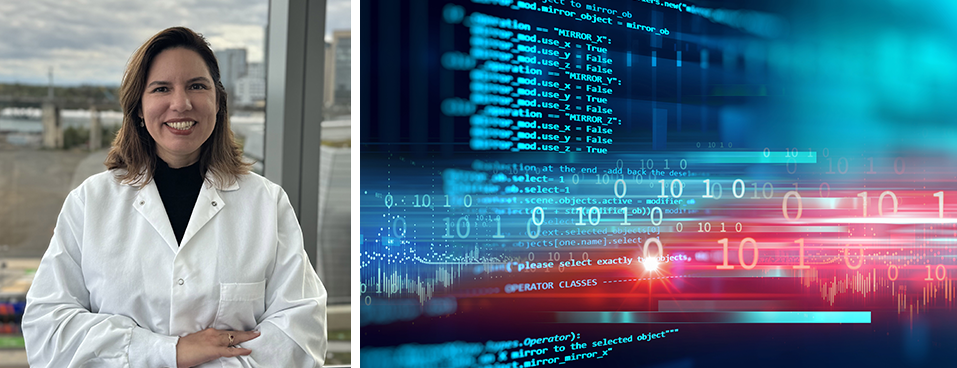
“We’re going to stop cancer before it becomes cancer,” says Cristiane Miranda França, D.D.S., M.S., Ph.D., an assistant professor in the Division of Biomaterials and Biomedical Sciences at OHSU SOD.
Dr. França secured a grant to team up with Jake Searcy, Ph.D., and Paul Dalton, Ph.D., of the University of Oregon, to build the artificial intelligence learning models.
Deadly Pathogens
OHSU SOD researchers have unveiled how a deadly pathogen alters its cell membrane in its quest for survival
The study, published in Nature Communications, advances our understanding of how Streptococcus pneumoniae adapts to diverse environments and causes disease.
The S. pneumoniae bacterium is the primary cause of pneumonia worldwide. Globally, it is the number one cause of death in children younger than five.
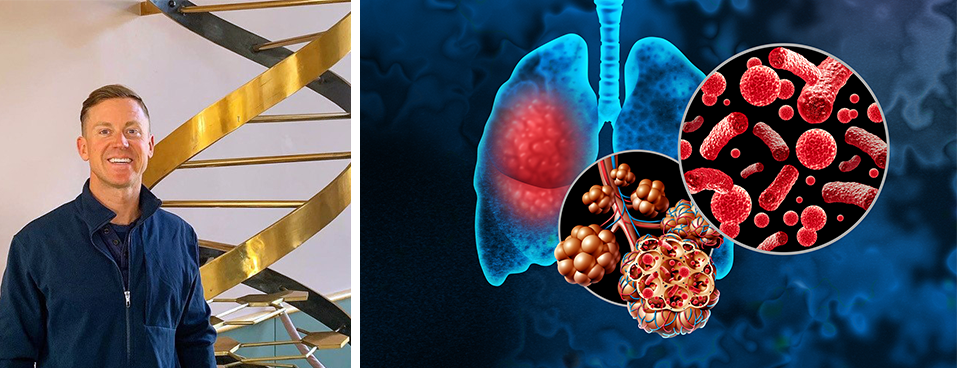
OHSU SOD researchers Jonathon Baker, Ph.D., assistant professor in the OHSU SOD Division of Biomaterials and Biomedical Sciences, and Matthew Barbisan, research assistant, are the study’s co-authors. They found that S. pneumoniae, can change its metabolism and even alter its cell membrane to survive in different parts of the body.
The team discovered surprising behavior, such as the bacterium not always choosing glucose as its main food source. They also identified a regulator that helps it cope with heat, which is important if, for example, a patient has a fever.
Courtesy of Oregon Health & Science University School of Dentistry
Published on February 11, 2026