
ADEA Releases 2026 Allied Dental Graduating Student Survey National Report
ADEA Releases 2026 Allied Dental Graduating Student Survey National Report
ADEA recently released a national report drawn from the ADEA 2026 Allied Dental Graduating Student Survey.
The report provides a comprehensive snapshot of the educational and professional journeys of graduating allied dental students. The survey explored a wide range of topics, including the motivations and influences driving students to pursue an allied dental career, their perceptions of their educational experience and their post-graduation plans and career investments.
The 2026 survey achieved a 22.3% response rate, with 2,773 graduating students participating across 264 Commission on Dental Accreditation-accredited U.S. programs in dental hygiene, dental assisting and dental laboratory technology.
Key Survey Findings
- Influences on career choice: According to 43% of respondents, personal dental experiences were again the leading factor influencing students’ decision to pursue an allied dental career. The influence of family, relatives and friends remained significant, with roughly 3 out of 10 graduating students citing a family- or friend-related connection as the most important factor in their decision.
- Preparedness for practice: Allied dental students expressed high confidence in their readiness to practice. Approximately 95% of respondents agreed or strongly agreed that they were equipped with essential skills, including clinical decision-making and communication.
- Education debt: Three-fourths of graduating students entered their programs without prior education debt, and more than half graduated debt-free. Among those with education debt after finishing their allied dental education, more than three-quarters owed less than $50,000.
- Post-graduation plans: Private practice, including dental service organizations, was again the most popular work environment for allied dental students planning to work immediately after graduation—accounting for more than 8 out of 10 of those students. Dental assisting graduating students were significantly more likely than their counterparts in dental hygiene and dental laboratory technology to pursue further education, with about 35% indicating plans to continue their studies immediately after graduation. Notably, more than half of the dental assisting graduating students who planned to pursue further education indicated a dental hygiene degree as their first choice.
- Educational experiences: Interprofessional and intraprofessional education experiences were widely valued, with more than 9 out of 10 of the students who participated reporting these interactions enhanced their understanding of collaborative care.
The Majority of 2026 Allied Dental Graduating Students Graduated With No Education Debt
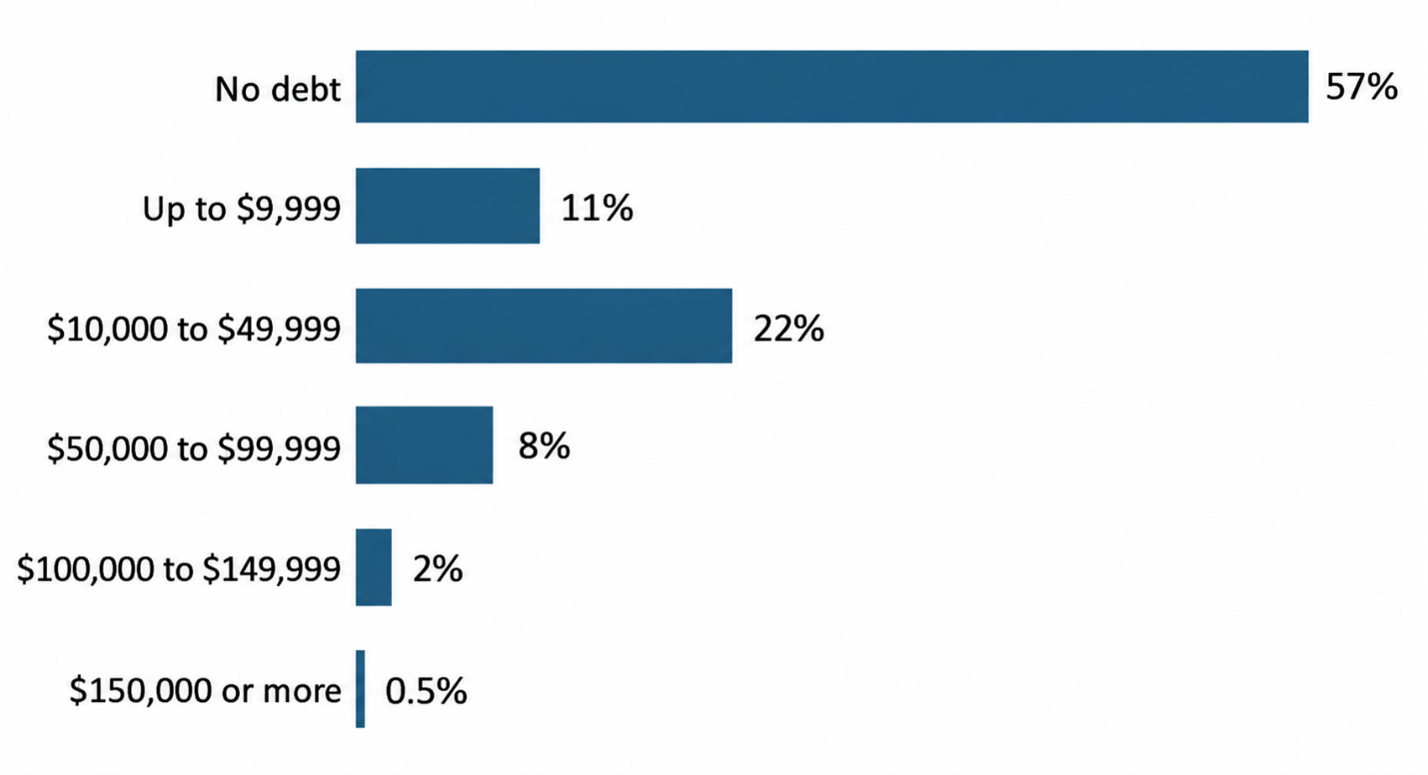
Note: Percentages may not total 100% because of rounding. Total education debt is the combination of the outstanding education debt a student had prior to entering an allied dental program and the education loans incurred during the allied dental program.
The report is fully accessible at the ADEA Graduating Students Research and Data webpage.
In addition to the national report, allied dental education program directors who are ADEA members have free access to aggregate data from the 2026 Allied Dental Graduating Student Survey in the ADEA Research Data Portal.
Program directors at ADEA member allied dental education programs who had 10 or more respondents for the 2026 Allied Dental Graduating Student Survey can also access an Excel-based report with the individualized results for their program through the ADEA Research Data Portal.
The following dashboards are available:
- Preparedness to Practice of U.S. Allied Students: National Metrics
- Available to program directors who are ADEA members
- Preparedness to Practice of U.S. Allied Students: Your Program
- Restricted to programs that had 10 or more respondents
For questions, please contact Pradeep Singh, Ph.D., Director of Higher Education Research in the ADEA Office of Education Services, at singhp@adea.org.
Published on November 11, 2026